
On the Ancestors
of JD Eduard Brzorád, a Young Czech member of the Austrian Imperial
Council and the Diet of Bohemia.
Chronicles of the von Herites, von Krziwanek, Delorme and Brzorád
families.
Written by Jan Steinbauer, translation © Mary Petersen (2017)
Email for your comments and
additions:
Familie Delorme
The extensive Czech
version is available here.

Marriage to Maria Anna Schell
(1759-1815) in 1783 and the masonic activities
Therese
Weissenberger geb. Delorme (1787- 1856)
Establishment of the German
Evangelical Community in Prague
Poem to the 11th wedding anniversary
House in Karmelitská (1795-1810)
Lochkov near Prague - Chicori factory
(1797-1804)
Villa Delormka built by K. I.
Dienzenhofer (1804-1828)
Johann Ferdinand Anton Delorme (1784
- 1806) – medical student
Cousin Louise Delolme in Smíchov
(1807-1810)
The senior official and treasurer of
the German Evangelical community (1807-1817)
Anna „Nanny“ Brzorad née Delorme
(1795-1846)
The death of Marie Anna (1759-1815)
and Ferdinand Delorme (1755-1827)

Introduction[1]
The narration about the origin of the bride of Lochkov’s
Brzorád takes us first to Switzerland - to the town
of Gy in Geneva’s canton where the forefather of this
family with a name unusual for Bohemia emerges as De Ulmo
in the 14th century. It was not until the late 16th century, that a certain
Luis De Lolme left Gy for
nearby Geneva, where the family will remain for five more generations until the
mid-eighteenth century. These locksmiths, but later rather watchmakers who have
in their coat of arms a green elm tree in a silver field, and who write their
name as De Lorme, become citizens of Geneva. Théophile Delolme even becomes
the clockmaker to the court of Landgrave from Hessen and Kassel and the King of
Sweden. Théophile already lived in Kassel, Germany,
and his son, also a watchmaker from Geneva later lived in Braunschweig.
It is the siblings of the family of
Brunswick among whom we find not only watchmakers and a Presbyterian elder of
the village, Antoine Nicolas Delolme, whose daughter
became a notable governess and an intimate friend of the Danish queens, but
also Ferdinand, who began writing his name as Delorme and was, apparently, a
very capable man. He is said to have had
his name changed, because in this way it was reportedly used by his ancestors,
who happened to be, according to a family legend, old Huguenot impoverished
nobility. About this Ferdinand we also know that as a Braunschweig
lottery official he used to sign his name as Delolme
and according to preserved court records he has been accused of various
offenses, and therefore was also detained and imprisoned.
In Prague, as Ferdinand Delorme he
fared better. Besides a jewelry and haberdashery
store overtime he bought Lochkov’s
estate, a house in Karmelitská street
in Prague's Lesser Quarter next to the Infant Jesus of Prague and finally the Dinzenhofer’s summer residence with a beautiful garden
today known as Portheimka in Smíchov. Considering that he had only started with
borrowed money, he did not do badly. In the history of the Bohemian Kingdom he
signed on as the first importer and producer of coffee substitute - chicory. At
the state bankruptcy of 1811, when the Viennese bank devalued the value of its
banknotes to 1/5, he lost most of his fortune. Ferdinand was the leading
representative of the German Evangelical Community in Prague and its longtime superior head. He was also an inspector of estates
of Count Tomtalais in Bohemia and as a businessman he
repeatedly travelled to Germany, France, Italy and Poland. He spoke and wrote
French as well as German and was in terms of nationalities and religions so
appreciative and tolerant, that with respect to matrimony, in which he lived,
he allowed his children to be raised in the Catholic faith and properly trained
in the Czech language.
His only son unfortunately died as a
medical student, but one daughter as the wife of a wealthy Viennese merchant
became the owner of an estate and mines in Hungary. Living alongside Lochkov’s landowner Brzorád awaited her sister
Anna. Josef Brzorád
apparently married this sixteen year old beautiful bride for true love Since it had
been three months between the bankruptcy and the wedding day, acquisitiveness
would not have been a motive. . Lochkov became not
only the paternal house of strong and capable offsprings,
but also the realm of sciences. Thanks
to a lively relationship with a cousin Delolme, it
was not only a distinguished painter Thorald Læssøe who came to Lochkov
on a visit from Denmark, but even Danish Queen Karoline Amalie herslelf.
Ancestors in Gy and Geneva
The
first known ancestors of the family Delorme/Delolme
come from the village of a Geneva canton Gy (also Gyez). The very first name that emerges from the Geneva
archive[2] is Mermet Cucuz
alias de Ulmo from Gy. The
following section lists the generations living in Gy
and later in Geneva, where they won the right of residence - domicile. It is
somewhat dull. Mostly we only know the names, dates of birth, death and
marriage, or the name of the bride. But we see also that they made it among
some distinguished Geneva families, whose origin is even noticed by the Swiss
biographical dictionary,[3] as outstanding watchmakers. We can also observe the changes which the
surname underwent. As the name of the ancestor de Ulmo
reveals, it is clearly a variant of the name derived from the residence, i.e.
"from the elm" de Ulmo, de L'Olme, de L'Orme, De Lhuermoz, Delorme, Delolme, etc. . Elm, which indeed can be seen today in Gy, can also be found in the ancestral coat of arms in
green color on a silver background. [4]
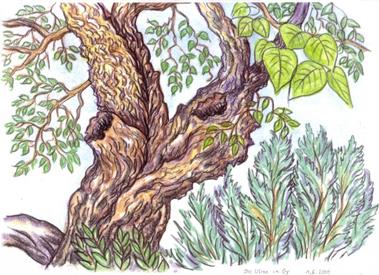
Figure 140 Elm in Gy – Die Ulme in Gy – sketch by Else Fritschl 1.6.2000
Mermet Cucuz alias de Ulmo from Gy ( Giez
) was the founder of the clan. His son was:
Michaud
de Gy ,
oo Violetta de la Planche from Gy + before 1429.
His son was:
Jean
oo 1434 Pernet de la Pierre
and in the year 1436 he was in Gy. His son was:
Antoine
De Loermoz. His son was :
Claude De Luelmoz from Gy
+ before 1592. His son was:
Louis
de Lorme / de Lolme lived
in Geneva since 1592, oo Jacquemin
Dufour of Tanninges in
Savoy, died before 1631. His son was :
Thomas
de Lorme *1607, oo 1631
Guillaume Folivet, daughter of Geneva citizen " citoyen Geneve",
+ of the plague 1636. His son was:
Louis
de Lorme, or de Lolme, *
1633, a locksmith, " ferretien
" oo 1652 Susanne daughter of Bernard Mandry BG 1655 received a B. G. " Bourgeois Geneve " = Geneva citizenship, died rounds the year
1701. His son was :
Thomas
de Lorme, or de Lolme *
1661, a master watchmaker and businessman, CG[5], +1708, oo Andrienne,
the daughter of Antoine Noël, CG, 2.oo Jaqueline 1686, her father was Jean
Jacques Sartoris (1630 to 1674) a pastor, professor
of Greek and a rector, whose son David was a judge and lawyer, as was the next
generations of the family. [6] Sartoris clan came from Piedmont and they
acquired the burgher rights in Geneva as early as 1573. In the right black
field of their crest they had a gold lion, in the left, which was split by two
blue beams, they had a gold star, with a blue on the top, gold on the bottom
part.[7] The son of Thomas de Lorme was for example
Major Nicolas (* 1684), lawyer Jean Louis (* 1707) but also:
Théophile de Lorme
* 1691 + 1750 in Kassel, a master watchmaker, Geneva burgher in 1725. He
married Jeanne Feuillet (* approx. 1691 + 1745 Nyon
Kassel), 1746, he married a second time with Elisabeth Charlotte Arlaud († 1753 Hannover). Arlaud’s
of Geneva were family coming from Maringues in
Auvergne. Antoine Arlaud won the bourgeois rights in
1617 and his grandson Jacques Antoine Arlaud was a
prominent painter, as were the future generations. [8] Théophile de Lorme
even became the watchmaker to the court of Landgrave von Hessen - Cassel and
Swedish kings[9]. According to the register “Correspondance
complete de Jean J. Rousseau , R.A. Leigh, 1947“ mentions the names
"Jeanne Feuillet, Theophille Delolme,
Noël” on p. 148 and the name "Delorme / Delolme"
on pp. 288-9. (Unfortunately the book is unavailable to the author.) Théophile had five children, who were born in Kassel
(Hesse-Kassel in Germany) and Geneva. Among them Jean Louis Delolme, who was born in 1729.
His famous namesake, a Swiss lawyer Jean Louis Delolme
(* 1740 in Geneva, +1806) was a distant relative.[10]
Only the works of Erben’s granddaughter Else Fritschl showed that he was the great-grandson of Louis DeLorme * 1633, son of Theophil’s
cousin – a senator Jean Louis * 1705/7. Jean Louis Delolme
* 1740 left Geneva in 1766 due to the unrest,;
he went to London, where he studied English constitutional law. His work “La
Constitution de l'Angleterre ou
...” published in 1771 in Amsterdam, immediately earned a great reputation and
was until 1807 published several times in English and French. In 1775 he
returned to Geneva, where he became a member of the National Council (Rat der Zweihundert).[11]
The last ancestor born in Geneva was
Théophil’s son:
Jean Delolme (*1709[12] - 1771), "Citoyen Genéve",
master watchmaker in Hanover, and later in Braunschweig. In 1748 he is registered in Hanover, where he was first married. His
wife, Louise Thiede of Halberstadt,
however died on January 13th 1749.
Jean Delorme for the second time married Anne Elisabeth Aubanel on Dec. 26th 1749 in Hanover. Anne Elisabeth Aubanel
from Magdeburg (1721-1796) died in Braunschweig from
exhaustion[13]. The bride was one of nine children, Father Manuel Aubanel
"Wallonisch reformiert
- Sommier en Langvedoc - Strumpfmacher"
that is a stocking maker and dealer, mother Marie, daughter of Claude Passepein, a hatter (Hutmacher)
and a burgher of Sedan.[14] .Since 1750, Jean Delolme had been registered
to stay in Braunschweig. On May 5, 1752 under the
laws of the city of Braunschweig he signed and
completed a purchase contract for a house.
It was a house with a yard of Johann Emanuel Gesberg
in New Street lying between the hospital and the toilets "... in der Neuen Straße und zwischen Spitta Schweiss Häusern belegenes Haus ..." which
the buyer Jean Delolme got with all the equipment for
1000 tollars.[15] They had five sons. Maricus Nicolas Emanuel
(* 1753) and Josias Samuel Christophe (* 1757) probably died soon.[16] We will tell more about Charles, Antoine Nicolas and finally about
Ferdinand.

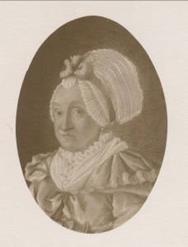
Johann / Jeann Delolme a Anna roz. Aubanel aus Rossel (archiv Jiří Brzorád)
Before
that, however, let us clarify why we discovered two variants of their names in
this generation. In a letter dated 1st
April 1892 the family legend is presented by a descendant William Brzorád. Johann
Delorme used - as well as some of his predecessors in Geneva - the name Delolme. But when
Ferdinand and his older brother Charlie discovered that their family was
originally a French aristocratic family and used the name De Lorme, they adopted this name, while the third brother
Antoine Nicolas stayed with name Delolme. “Sein Vater
führte, so wie einige siner Vorfahren in Genf den
Namen Delolme, als aber er u. sein älterer Bruder Charle erfuhren, ihre Familie habe ursprunglich
in Frankreich als Adelsgeslecht den Namen De Lorme geführt, nahmen sie diesen Namen an, während der
dritte Bruder Antoine bei dem Namen Delolme blieb.”
[17] Regarding
this legend we read in the newspaper
article “Frau Brzorád
Erzählt” from 1935, where Ferdinand's great-granddaughter
Augusta Brzorádová (1851-1940) tells
about the origin of the
Delorme family: „… eine Hugenottenfamilie, die zur
Zeit Ludwigs XIV. aus Frankreich auswanderte. Delorme
waren wohl kleiner franzözischer Landadel.“ The legend is clearly inconsistent with the
findings by Else Fritschl from the Geneva archive since
Louis XIV. threw the Huguenots out of France only in
the second half of the 17th century. Please note that in Auguste’s
sentence about a minor French rural aristocracy the cautious word "wohl" – perhaps was used.
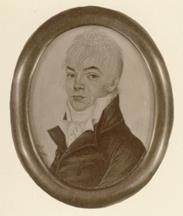
Image 141 Charles Delorme (brother of Ferdinand)
Charles Delorme (
+1829 ), in German Carl, was a businessman. In the city archive of Braunschweig in 1804 a purchase of a house by a merchant
Carl Delorme on Hagenbrücke
and on Reichenstraße (streets) is documented.[18] According to Wilhelm Erben, Charles was later
an editor and private tutor, first in Prague and then in Kassel. He and his wife
Lilly had a son, who died in 1814 and daughter Jenny, who married the postal
clerk Docagne in Paris, who owned an “educational
institute”. The Docagne’s had two daughters. Caroline, who married an officer, and Anais, who married a preacher
who worked in that educational institution. Charles died in Paris in
1829.
Antoine Nicolas Delolme[19] (1752-1836), christened as Jean Marc Antoine Nicolas lived in Braunschweig. He took over his father's watch making
business and also was apprenticed himself as a watchmaker and was awarded the
title of "court watchmaker" till his late age. He was the oldest and last presbyter of the
French Reformed church community in Braunschweig,
which after more than a century, in 1811 he joined
with the German church community. In
1780 he married Anne, daughter of Franz Christian Schwarz, a watchmaker in Braunschweig.
On 01st July 2010 the auction house Christies auctioned a North German
neoclassical table clock of mahogany and gilded brass, which beats every
quarter hour.[20] According to the label it was manufactured by Antoine Nicolas Delolme registered “horloger de
la cour” (Hofuhrmacher Herzogtum Braunschweig) in
Brunswick in the late 18th or early 19th century. The estimate was listed at 4-6.000, - Euro.
It was auctioned for 45.632, - euro. In the footnote of the catalog
we read that little is known about A. N. Delolme. He had his workshop in Braunschweig. It is known that he had several apprentices
who worked for him, but the extent of his work is not known. The title Hofuhrmacher and the robust neoclassical appearance of the
clock, - which
at that time was very fashionable and is clearly affected by the design of
David Roentgen - indicate good craftsmanship and an important position as a
watchmaker.[21]
They had ten children. Four died at an
early age. They raised three sons, who were devoted to commerce - Henry was a
watchmaker in London - and three daughters as governesses. The most famous middle daughter Louise Delolme (1791-1851) was recalled by Augusta Brzorádová in a newspaper article “Frau Brzorad
erzählt”: "Louise Delolme
spoke several languages and
worked as a governess in various aristocratic families. Finally, in the Danish court, where she was
the governess, companion (Gesellschafterin), even a
girlfriend of two queens. Many
charitable deeds for which the Queen Caroline Amalie
is still honored in Denmark, came from the initiative
of her lady of the court and friend, Louis Delorme." How ardent their friendly relationship was,
we can see from the fact that the princess, and since 1839 the wife of Danish
King Christian VIII., Karolina Amalie visited the family of the governess, and
not just in Braunschweig. But to her Lochkov
visit in 1838 we will return more fully in the section of Familie
Brzorád.
Louise Delolme was with her relatives who
lived in Braunschweig and with the Brzorád’s from Lochkov in lively
communication.[22]
Significantly
more information about Louise Delolme can be found in
a biographical study by the Lochkov’s Brzoráds’ descendant, historian Dr.
Wilhelm Erben “Louise Delolme
die Erzieherin zweier Königinnen von Dänemark , Wien ,
1897".[23] From here we quote below about Louise’s stay
at the Delorms in Smíchov
in the years 1807- 1810. Also the first
ward of Louise, Crown Princess Louise von Hessen - Kassel, later the wife of
Danish King Christian IX (reigned 1863-1906), honored
her governess so much, that in 1851 she accompanied her coffin to the cemetery.[24]
The fact that Delolms
worked as watchmakers in Braunschweig as late as in
the first half of the 19th century is known, for example, because Christian
Friedrich Tiede (1794-1877), “Chronometermacher" in Berlin was
apprenticed as a watchmaker in Wismar and then worked “bei
Delolme in Braunschweig.”
Ferdinand Delorme (1755-1827)
Ferdinand
Delorme, born on August 20th 1755, baptized as Johann Jacob (Jean
Jacques) Anton Ferdinand[25], was originally an official of the lottery office in Braunschweig, where he produced a calendar with thorough
instruction about the lottery offices in Europe in 1776. At that time he still signed his name as Delolme. According
to a preserved court records from the years 1772/3 Ferdinand Delolme was as "Supernumeraire
beim Lotto" accused of various offenses. He was therefore arrested and then
imprisoned. The entire file was then submitted to the ruler - the Duke Karl zu Braunschweig-Lueneburg. Even a surviving love letter from Ferdinand
to a certain "Amalia" was found.[26]
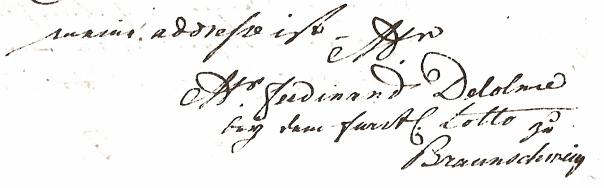
Image 142 Signature of Ferdinand Delolme for
Lotto in Braunschweigu[27]
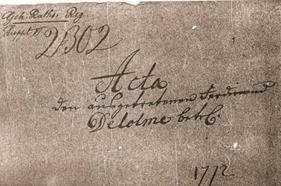
Image 143 The envelope of the court file from the
years 1772/3[28]
Vilém Brzorád in his letter from 1892 recalled the
following about his grandfather Ferdinand Delorme: "Later he devoted himself
to business, he kept a store with haberdashery goods, which is characterized by
instability (volatility) and taste (die sich durch Labilitaet und Geschmack auszeichneten) and
although he only traded with borrowed money, he earned a considerable fortune. Ferdinand Delorme enjoyed the great
respect and trust of his fellow citizens, thus for a long time he served as the
superior of the German Evangelical Community in Prague and the head of the
Prague orphanage and as the inspector of Count Tomtalais’
estates in Bohemia. As a businessman he
repeatedly traveled to the German Empire, France,
Italy and Poland. He had a command of
spoken and written French as well as German.
In regard to nationalities and religions he was so appreciative and
tolerant, that in his own marriage, he let his children t
be educated in the Catholic faith and properly trained in the Czech
language. In his area he was considered
to be a man with a clear head, and was also able to advise well in matters that
did not fall directly into the field of his knowledge."[29]
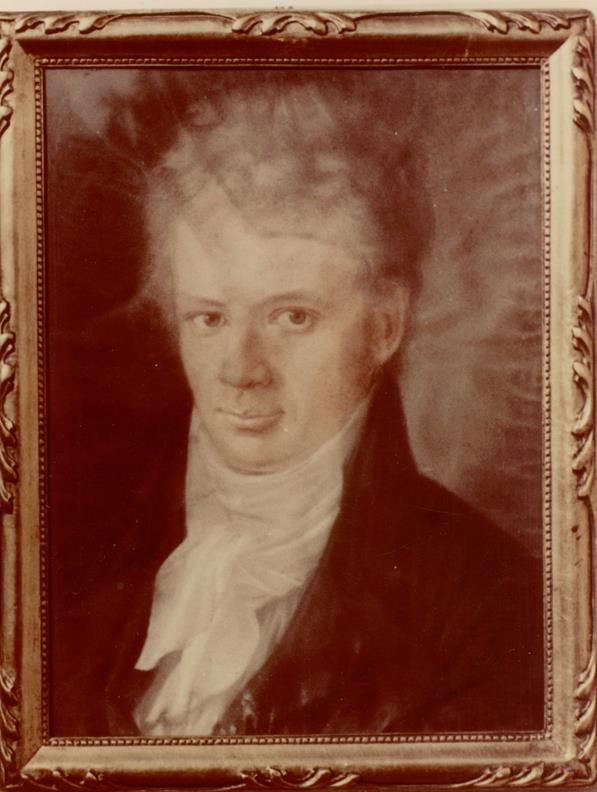
Obrázek 144 Ferdinand Delorme (1755-1827)[30]
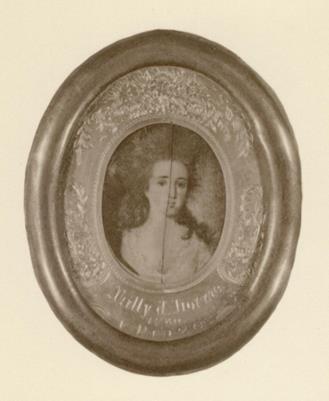
Image 145
Marie Anna Delorme born Schell (1759-1815) „Nelly d’Lorme
1782 in Prague“[31]
Marriage
to Maria Anna Schell (1759-1815) in 1783 and the masonic activities
Ferdinand
Delorme was in Prague apparently until his wedding on January 30th
1783.[32] It took place in Prague, and he then married Marie Anna Schell
(1759-1815), daughter of a Prague merchant Johann / Joannes
Schell (1713-1802) born in Austria[33], buried in Prague.[34] Marie Anna was born at house number 50[35] and was baptized at St. Vitus 1759.[36]
In the work “Geschichte der Freimaurerei in Österreich-Ungarn” by Lajos Abafi,[37] chapter “Fünfter Zeitraum
1781-1785” we read about the origin of the Masonic Lodge (□)[38] UNION in Prague. Among the named
founding members is "Kaufmann Delorme" from □ At the three crowned columns in Prague (□ Zu den drei Säulen
gekrönten).[39] At the inauguration by the Count Kinigl on
December 14th
1783 besides the Master, a deputy, a treasurer, and the master of
ceremonies also “Delorme fürchterlicher Br.” ("Unbearable" brother?) was
inaugurated.[40]
Regarding Ferdinand Delorme's
masonic activity in 1783, a
book of confidential official writings
"Prag. Loge zur Union" of the Austrian
cabinet archive has been preserved. It contains
two files: "Schreiben dieser "Loge zur Union" betreffend die Beförderung von Ferdinand Delorme" of October 1783 and "Protokollauszug
der Loge "Zum heiligen
Joseph" in Wien betreffend
Ferdinand Delorme, Hickl, Berwin und Mazzulini
"of 13 November 1783.[41]
However,
masonic activities were banned by the Austrian government in 1795. Further
activities were carried out from Hungarian and German lodges.[42]
In 1785 after the
merger of the cities of Prague (1784) Emperor Joseph II abolished the trade and
bill court and joined it with, and merged it with the city court. Members of the estate had to choose from
among themselves two assessors as free consultants and other two as their
deputies. Within 14 days the
municipality had to make an alphabetical list of all members of commercial
profession for the election of representatives.
Apart from the names Dominik Arioli, or
Delorme Ferdinand, the list contained about 120 other names. [43]
Therese Weissenberger geb. Delorme (1787- 1856)
In 1787 Therese was born, baptized Filipe
Therese. Throughout her life she was
very close to her sister Anna. She died
as a widow of Caspar Weissenberger, formerly a trader
in Vienna, then the owner of the estate Mogyoros in
Hungary. When her nephew Edward Brzorád studied the law in the early 40s in Vienna, he
lived with this aunt in Herrengasse no. 26. The Mogyoros estate in Hungary was later taken over by another
nephew Rudolf Brzorád, who obtains it from his Aunt
Therese and becomes very wealthy. In the
chapter about Josef Brzorád there is a picture of
Rudolf as well as an image of the manor.
Her great-niece Anna Brzorád (1847-1934)
remembers her this way: "My great-aunt Teresa Weissenberger
- Delorme, my grandmother's sister, was the godmother of Ferdl
(probably Ferdinandine Brzorád
1855-1930 – editor’s note) and received a pink baptismal outfit from her. Great Aunt Teresa was a lovely old lady in a gray silk dress with a snow-white hair. When Leni was combing her hair, it fell like
a cloak around her. I saw it once, and
it was unforgettable. With amazement, I
watched the old lady .... Emma, then 15 years old, travelled with her great-aunt to
Hungary, where she found and read the whole collection of letters from our parents,
with short but detailed reports on Dobříč and Lochkov."[44]
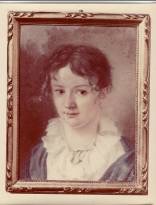
Image 146 Therese Weissenberger born Delorme (1787-1856)
Establishment
of the German Evangelical Community in Prague
In
the years 1787-8 there was a merger of the Czech and German Evangelical
Churches in Prague. "The horizons,
the business experience and personal influence of wealthy Germans could benefit
considerably the Czech Evangelics who were without a
broader vision and education." The representatives of the sides were Baron
Zedwitz and Tomáš Zycha. According to
the agreement both the churches had to care together for the prayer hall and
the „salár”[45] of their minister, who had to be able to serve in both languages. Here in Prague, they had pastor
Matěj Markovic (1752-1793)
from Szarvas in Hungary, (husband of Rosina Elizabeth
Sölöšiova), who was previously a spiritual
administrator in Puszta-Födemesi. He “favored the
connection and it was probably he who brought both parties to the agreement,
having established friendly family ties with the German Protestants. This is indicated by the baptism of his
daughters Juliana Ludvika Amalie born July 21st
1788. The godfather was Ferd. Delorme, businessman in Prague, and
his wife Anna. The child,
however, died on March 2nd 1790.[46]
In
1789 the German Evangelical Community in Prague was founded. For this cause
"Extremely active Ferdinand Delorme” declared for and expressed his support by a commitment to
contribute annually 30zl. He did so
"with real pleasure [...], but with the express condition that they
received good and lasting measures that will ensure the uninterrupted
continuation of our worship and lay the foundation of the German Protestant
community. If this goal is
reached, then I might pay more than what it is here undertaken, but otherwise
nothing else." [47] The other 90 members have contributed a lump
sum of 3zl. on average.[48]
In
1789 ninety-one families of German Protestants, including those of several
Catholic French emigrants who had just arrived from revolutionary France to
Prague, made a commitment to pay an annual sum of 398 zl. 4 kr. ... Out of the
amount subscribed they only earmarked a part of the contribution for the Czech
church and to the preacher, and the rest was to be used for other church
purposes of the German Evangelical congregation of which establishment they
were now thinking. Therefore they chose
four representatives. The representatives
became the factory owners F. Delorme, Georg Hermannsfeld,
Chr. Fr. Meyer and Joh. Pet. Piccart.
Delorme
suggested[49] that all German Protestants, A. and H.[50] form one group and have just one
pastor and one common worship. The proposal was approved by the German
Protestants, A. and H. c. and Markovic was asked to
be their preacher. At once the mutual
relationship between the Czech and German Protestants was discussed as
well. On 1st June 1789 the
drafted contract was submitted to German Protestants, after an agreement with
some German Protestants, especially Delorm and Ch.
Fr. Meyer, by Czech senior representatives Zych and
Svoboda. (an extensive quotation from the contract
follows) ... The Czechs apparently wanted to protect themselves from the
liturgical and ethnic influences of the Germans. ...
However
disagreements occurred shortly after. Markovic often had to go to the countryside to serve the
local evangelics, and he could not manage
everything. And then the Germans
complained that Markovic served them little. ... The
tension between the two churches especially arose from the liturgical
differences. During the Czech services
there was no crucifix on the altar, but the Germans wished to have it at least
during their church services; but Markovic was
reluctant to grant this to them to avoid upsetting the Czechs. The Germans considered Markovič’s
conduct as obstinacy. But some members
of the German Reformed Church, those of the French origins, such as the
representative Delorme[51] and Chr. Fr. Meyer, Ettiene Boulogne and Joh.
Gottfr.
Calve were not upset with Markovic, but stood by him
even more. They even promised
him an increase in salary by 50 zl. They wished for a close connection of Czech
and German Protestants in one church.
But a split occurred between them and the other German Evangelics.
Delorme[52] was probably in the minority, so he resigned from his office as their
representative and soon thereafter Chr. Fr. Meyer as well. The remaining Piccart
and Hermannsfeld had the vast majority of German evangelics behind them when they wanted to release their
union with the Czech congregation.[53]
The
German Protestants turned for help to their fellow believers in Germany, so
that they could call over as pastor M. Joh. Chr.
Fried. Götschel. Delorme, however,
and Meyer, having resigned[54] from the representation of the German church, refused for the moment to
pay their contributions to the German church and negotiated a union with the
Czech Protestants.
Together
with Boulogne and Calve they filed a complaint to the vice regency on November
4th 1789, where the whole procedure of merging the German and Czech
congregation is described.[55]
In
1791 St. Michael's Church in Prague was bought for 1527 zl. from a merchant Franc. Kehrn by the German Evangelical community of which F. Delorme was a
leading member.[56]
In
the calendar of traders of Brunswick for the year 1791 is this record,
"Delorme, Ferdinand, le jeune & Compagnie, verkaufen alles, was zur Bijouteriehandlung gehört: Warenlager Breitestraße." [57]
"Believe me, it is not possible to write
them in detail where and what could be bought to eat, telling would repeat
itself, therefore after re-stating that the mountains of delicacies worthy of
most copious country were growing here we will give just a few facts as a testimony to that. The first one, the company Delorme and co. “At the
blue column” on the Ovocný trh
(Fruit Market) (No. 403-I., March 13, 1792), widely remembered all the
alcoholics. Besides the red and white
champagne they had brandy for every taste: anisette Indian and Verona, krfons orange, strawberry, vanilla, that nutty cream,
besides them, then two liqueurs that for the ignorance of the bottle contents
stood there under the name of corporate price list: one called oil of Venus
second “crème de Canelbe”.[58]
Poem to the 11th wedding anniversary
In
1794 a poem was dedicated to the couple of Delorme for the 11th anniversary of their wedding:[59]
Gedicht bey Gelegenheit der
ellfjährigen Hochzeitfeyer
von Hern und Ma-dame Delorme. Den 30.Jäner. Gewidmet
von Krafft- Dihm, Stozycki.1794
Auf Rosen
stieg der Tag
hervor
Aus
finsteren Gebirgs-Klüften: Sein goldner
Morgenstrahl verlor
Sich In
den Steinchen welszer
Trieften, Die in dem schönsten
Wiederschein
Die weisz geflockte
Erde schmückten; Für euch
au frohen Traungsreih'n,
Chorus.
Wie
lachet der Morgen in Glanze gehüllt;
Wenr Hoffnung die
Herzen mit Freuden erfüllt,
Und redlichen Seelen
hinnieden Zur Wonne das
Schicksaal entschieden, Und Wonne
die pochenden Herzen
gestillt.
Hell flimmerť Amors
Fackelschein,
Als ihr o
fromme zum AItere Der Trauung tratet: Hell und rein
Erblühten
über eurem Haare Die Kränze, die
euch Hymen wand:
Und alle
Liebesgötter flogen Herab vom fernen Himmelsbogen,
Als euch
des Priesters Hand verband.
Chorus,
Schon Knüpfet
die Herzen der süsze Vertrag;
Schon rauschet
in Freuden der
fröhliche Tag In seeligen
Stunden verflossen, Wenn Ehen
der Himmel geschlossen,
Die hier nur die
Liebe zu knüpfen
vermag(
Sanft strahlet
vom Auge der Liebe
der Glanz, Noch sohöner am Scheitel
der liebliche Kranz; Dem
liebende Herzen sich
weihen: Schon hüpfen im Jubel
die Reihen Zur heiligen Feyer, zum
göttlichen Tanz,
* *
Und wenn
das Rad der Zeiten sich
Des Jahrs
zu diesem Punkte drehet,
Und lhr dem Tage feyerlich
Der
Trauung huldiget; dann stehet
Der Gott
der Ehe, und um ihn
Die Liebes-Götter fröhlich alle: Und von der
blauen Himmelshalle
Blickt froh des Himmels Königinn,
Und eilfmal hat die
Sichel schon
Die goldnen Halme abgemähet;
Und eilfmal über Stoppel schon
Des
kalten Worden Wind gewehet: Seit euch die süsze Kette band,
Und
schöner noch in süszen Freuden
Und
Seligkeit, von Harm und Leiden Der mehrsten Ehen ebgewandt.
Chorus.
So
springet und schwinget euch munterer heut, Es locket das Glück und es locket
die Zeit:
So tanzt
nach dem herrlichen Paare,
Das sich heut am Gottesaltare Durch Liebe und Tugend der Ehe
geweiht.
Den Alten
vergnüget der köstliche Wein;
Die Liebe
den Jüngling und Mädchen allei: Doch íüber das Bündnisz der
Treue Kann Wonne des Glückes
im Maye
Kann keine gewünschtere
Seligkeit seyn.
Und wie
die Sproszen
um euch her In süszen Tändeleyn und Händeln
Stets lernend
immer mehr und mehr
Um euren Schosz so kindlich
tändeln;
Es sey ihr
Glück und euer Glück!
Und dann, ach seh't mit
trunknem Blicke
Und hoch erfreu´t bei ihrem Glücke
In
die Vergangenheit zurück.
House
in Karmelitská
(1795-1810)
In
1795 the “goldsmith Ferdinand Delorme,” [60] einer Gold, Silber und aandere
Galanterie waaren=Haendler[61] bought a house nr. 381-15 in Prague’s Karmelitská
street called 'U Ramhovských' for 7.000zl. , in the
house he very likely under took larger building alterations, because when he
sold it in 1810 to Carolina von Thisebart the
purchase price reached above 40000zl. [62] In the picture by F. and. F. Hegers below
from 1794, it is captured as a spacious, three story high Renaissance residence
– first on the left; one house over down to the left No. 378-17 is bought in 1816 by Baron Johann von Herites with wife Barbara.
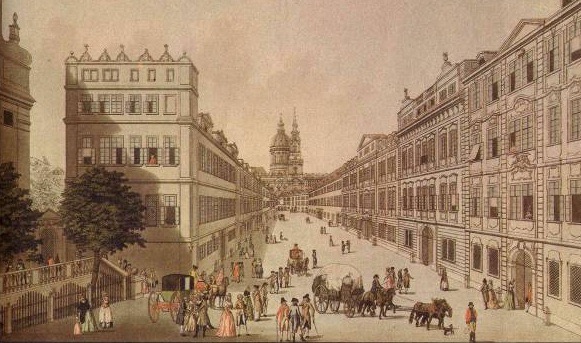
Image 147 Karmelitská 381/15, First house on the left, F.
F. Hegers, 1794 [63]
On June 9, 1795 daughter Anna Katharina Elisabeth Theresia was born in nr. 290 / I - today Konviktská 17. The
godparents were Katharina Gerber Theresia ... , Johann
Schell.[64] Because Anna is the future bride of Joseph Brzorád,
we'll learn more about her later in chapter Familie Brzorád.
Lochkov near Prague - Chicori factory (1797-1804)
In
1797, Ferdinand bought an estate near Prague’s Lochkov
from Jan and Matej Novak, Prague burghers. In 1800 he established a factory there, the
first such in the whole of Austria, for making chicory and drying of succory,
carrots, pears, grain malt and acorns[65] and all other crops needed to produce chicory. From Lochkov it was
transferred to Smíchov in 1804,[66] when Lochkov was bought by Alois Arioli.[67] J. Sommer emphasizes that Delorm’s "Cichorienkaffeh = Fabrik", was among the first in the country.[68] Mention of the factory can also
be found in the Encyclopedia of Austria Hungarian
Empire through letters and images: "... And just here in the first decades
of this century in Bohemia larger number of new industries domesticated.
Between 1800 and 1804 companies of Delorme and Agosto Tschinkel
and sons built the first chicory factories at Lochkov
by Vltava and Schonfeld near Krebitz,
thereby becoming the founders of the production of coffee substitutes, which
was quite important for agriculture in Bohemia."[69]
In
the meantime Ferdinand apparently did not leave the store. In the Schematism for 1800 we find the entry: „Delorme Ferdinand firmirt: Delorme und Komp. Mit allen moeglichen Bijouterie=Waaren, beziehet auslaendische
Messen, und úbernimmt Spedizions
= und Kommissions geschafte
aller Arten in=und aus=landischer Waaren,
auf der Kleinseite in der Karmelitergasse im eigenen Hause N. 458.“ [70] It
was a Lesser Town No. 458, today Hellichova
No.1. If the Schematism
is correct, that the house was his own, it is possible that Ferdinand even bought
this house. In 1806 for a change Schematism locates
his trade in house number 381.
On
September 6th 1800 the quintets of famous Czech composer Pavel Vranický (1756-1808) were first released in Germany in the
town of Offenbach. Vranický
worked mainly in Vienna’s Opera House and was popular in aristocratic
circles. His opera Oberon was even
played at the coronation of Emperor Leopold II. in
Frankfurt. On the first page of the
quintets the dedication reads: „Drei
Quintetten für 2 Violinen, 2 Bratschen und Violonschell
verfast und seinem Freunde dem Herrn Ferdinand
Delorme und dessen libenswürdigsten Familie
zugeeignet von Paul Wranizky. 38tes Werk. No. 1426. Pffenbach a/M. bei
Joh. André.“ "Quintets were thus written
and dedicated from Paul Vranický to his friend Mr.
Ferdinand Delorme and to his kindest family.[71]
About
the orphanage of St. John the Baptist in 1803 we read: "The aristocratic favor is unpredictable and no one knows, for how long the
new privilege will benefit the institution. The new privilege was granted by
Francis II., when the chairman of “orphanotropium”
Ferdinand Delorme asked for it. It consisted of the right to organize annually
two masquerade carnivals to the benefit of the orphaned, outside the regular
period of carnivals, as well as repeated annual present of six barrels of salt,
with the explicit remark that the validity of the privilege does not apply to
the whole future, but only the next twenty years. January 7th 1803.”[72]
Villa
Delormka built by K. I. Dienzenhofer (1804-1828)[73]
In
1804, Ferdinand bought a garden with residential building, orangery and a
greenhouse in Smíchov near Prague (!). It was a
summer palace, today called Portheimka in Štefánikova street, which was built by the famous Baroque
architect Kilian Ignac Dientzenhofer
in the years 1722-1729, and decorated by V V Rainer
with a ceiling fresco called "Bacchanalia".
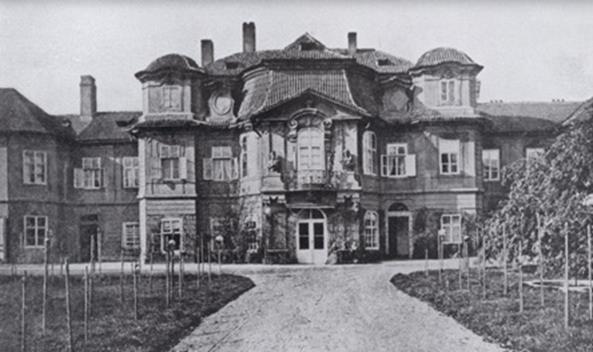
Image 148 Portheim Palace, condition before
demolition of the left wing, foto. J. Eckert kol. 1870
According to the newspapers of that
time "Locals of Prague, when warmer weather occurred liked moving out of
town. ... Mr. Baron Wimmer, knowing their wishes, had
been offering them seven bedroom apartment - but actually and exclusively for
the summer - in the wine house in Zvonařka (April 23 1799) and equally large apartment was rented in Smichov’s Buquoyka[74] (18 April 1804), which again wants to make available only four rooms,
connecting them to the outside kitchen, stables and sheds for a few horses,
this time also salla terrena
in the garden (May 15th, 1807)”.[75]
Delorme
transferred here and ran the factory and set up a cafe. It was called the Delorme’s garden then.[76] It should be stressed that Smichov housing development then was quite different from
the present state. Originally the garden
was stretched down to the Vltava bank.
Antonin Novotny states (as usual without listing any sources) these
quotes – probably from the press of the time: "... In the rooms painted
originally by Rainer no longer rules even Bouqouy, no
longer Countess Žižkovičová hosts the emperor, and
even a guest quarter once established at the villa disappeared, to make space
for factory for chicory. That time Bouqouyka, now Portheim’s villa
is forever closed to the public and it will be perhaps better when the
homestead with a factory, now being on sale, either as a whole or individually,
finds a buyer. (April 27th 1819). Oh no, this once gathering place
of Prague's most elegant society in the time 30 years ago will remain, until
the final parceling, dedicated to industrial
production. (October 24th 1830)”[77] Bouqouyka,
according to a family legend also “Delormka” was not
sold until 1828 - after Ferdinand's death at auction to Portheim’s.
They then had an additional story built on top of the first floor and later the
left wing was demolished for the construction of a church.
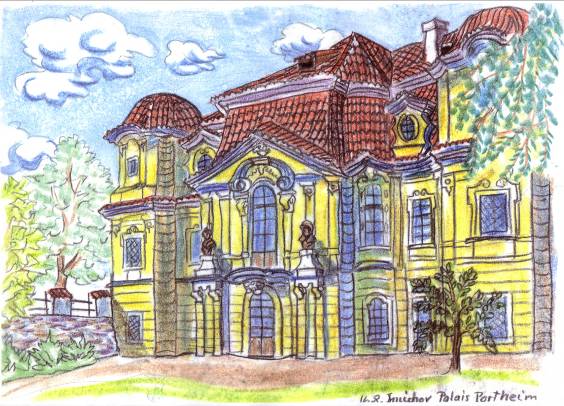
Portheimka, drawing by Else Fritschl 2005
Johann
Ferdinand Anton Delorme (1784 - 1806) – medical student
By
1807 five children died at Delorme’s household at a
young age.[78] Great pains were certainly felt
by the death of their only son Ferdinand , baptized
Johann Ferdinand. Ferdinand was born
25th April 1784 , and died on 4th February
1806 at the age of 22 as a medical student, as a result of infection he got in
the hospital.
“Prague
lost a stack of Kolovrat graphics as well as a pile
of graphics of Franz Josef von Sternberg, dispersed by four auctions of Dresden
auktioneer G E Heinrich (house number 7 - III . ). Occasionally prints of French English origin were
sold off by merchant Ferdinand Delorme, who inherited them from his son, or Malá Strana’s pharmacy “At the
Black Eagle”” ( 14th August and 28th December 1807).[79]
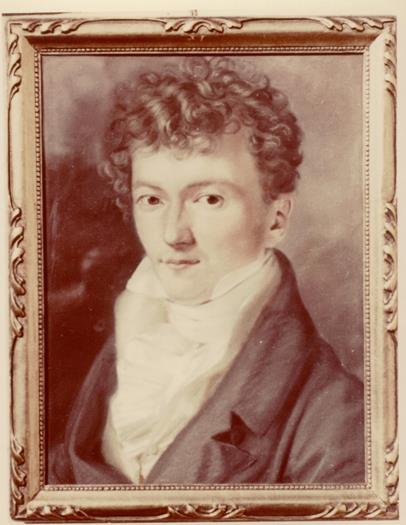
Image 150 Johann Ferdinand Delorme (1784 - 1806), medical student
Cousin
Louise Delolme in Smíchov (1807-1810)
"In the spring of 1807, the 16-year-old
cousin Louise Delolme left her home in Brunswick and
arrived at her uncle’s, Ferdinand Delorme in Smíchov
near Prague and stayed for three years. Anna, called Nanny was 12 then, and her
only sister Therese (five siblings had died) was already married to Mr. Weissenberger.[80] What made Ferdinand Delorme to
take his niece to live with him? The
main intention was probably to revive the lonely house and bring an older
friend and a leader to a younger cousin.
Louise and Nanny started a fervent friendship, whose pure loyalty and fervor lasted
until the last days of their lives, although fate separated them not only by
space, but also determined completely different ways of life for them. Both girls certainly worked in those three
years together also on their studies.
Louise despite her age was already a lead teacher to her younger
cousin. At that time she was also still
under the educational influence of her uncle and aunt, for whom good
circumstances allowed a high standard of living to which Louise was already
accustomed from Braunschweig.
By chance the information survived
that Ferdinand Delorme and through him his niece was also interacted socially
with local celebrities. Elector Wilhelm I von Hessen, displaced from his land
in 1806 by Napoleon, spent several years in Prague until the turnover in 1813,
which allowed him to return to his residence.
(A Cabinet Secretary to the Elector, who once saw Louise in the house of
her uncle, during
his diplomatic journey to Augustenburg on Oct. 4, 1812[81] brought greetings from her relatives in Prague. During her later stay in Cassel she met many
more members of the Elector’s court, whom she had known from Prague; General Tümmel brought her greetings „Empfehlungen”
– regards to her uncle in Prague on April 30th 1819.) The initiative for these contacts came - no
doubt – from the fact that Ferdinand Delorme was in those years (1807-1816) a
senior for the Community in Prague, at the establishment of which in 1789 he
gained considerable merit by his energetic input (durch
sein energisches Eintreten)
and by his material support. Thanks to favorable financial situation which Delorme enjoyed until
the state bankruptcy in 1811, living in his house was certainly sociable; his
niece enjoyed various changes and stimuli; as we know from one stay in Karlovy
Vary especially, which Louis even in later years remembered with a particular
pleasure.
In the spring of 1810 the marriage of Louise's
eldest sister Elise marked the end of her stay in Prague. She was the successor
to her sister and thus "has been promoted" as she jokingly used to
say, "from the governess (Obersthofmeisterin)
of her beloved cousin to the governess of a princess." This Princess
(later Queen) was Caroline Amalie of the ducal family of Schleswig-Holstein-Sonderburg-Augustenburg, the
side-line of Danish kings. She was about 5 years younger than Louise."[82]
The text above comes from the German original of the
family descendant and a historian Dr. Wilhelm Erben’s work "Louise Delolme
die Erzieherin zweier Königinnen von Dänemark, Wien,
1897." In the preface Dr. Erben
describes its main source - the 40-year lasting cousin’s correspondence:
"What I convey in the following (42) pages about Louise Delolme, is based essentially on her own words. Since 1811 the uninterrupted exchange of
letters with her cousin Anna Delorme, married Brzorádová
living in Lochkov near Prague, persisted; after her
death, Anna’s oldest daughter maintained the link between Lochkov
relatives and Louise Delolme, though not as
regularly, until the death of Louis Delolme in 1851.
The number of letters that Louise at the interval of 40 years sent to Lochkov this way, amounted to nearly 180, and 170 of them
have been preserved.
The
contents of these letters, most of which use quarter sheets with writing all
the way to the outer edges, gave me the foundation of Louise's biography.
Besides the warm friendship of the two cousins these letters display reliable certification for the life of Louise
and often shed remarkable light on those circles at the court, with whom she came into contact so closely." [83]
The
senior official and treasurer of the German Evangelical community (1807-1817)
In
the years 1807-1817 Ferdinand Delorme was the senior official “Vorsteher” and treasurer of the German Evangelical Community
in Prague at St. Michael. He was aware
of the bad pay of the pastor and the verger and tirelessly searched for new
sources of finances. He urged individual members of the community with constant
proposals to increase their contributions.
He rented some places in the pews – which did not go without controversy
- Freilich nicht ohne einigen Widersprucht.[84] Delorme had suggested "sehr löbliche Einrichtung" -
namely, that the original owners or builders of the church seats will have
their lease option to purchase.[85] It seems that he did this so he
could avoid the improper collection of money after the service on the paten and
ciborium „Missbrauch des Tellers und der Büchse bei der Kommunnion“.
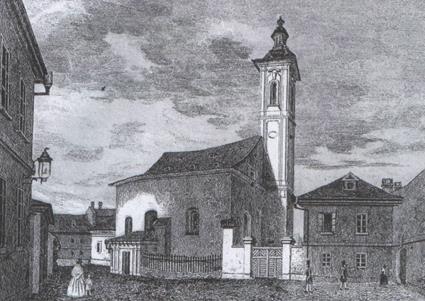
Image 153 Modlitebna “Bethaus” zvenku od západu (rok 1841)[86]
In
two years – by 1809 the community has accumulated a decent fortune.[87] In addition, they managed to
create a fund for the poor. Delorme
after these successes continued efforts to improve the economic situation of
the community, among other activities he sought hiring a teacher, for which,
however, they lacked the funds. Delorme
appealed once again to the self-sacrifice of the community members, and his
tireless efforts were crowned with success.
Despite the bad times many members increased their contribution two or
three times.[88] In the annual report of the
German Evangelical company from 1809 Delorme writes:
“Despite
everything we must admit that we fear for the future .Only one look at the
individual accounting items is needed and each member of the community will be
convinced that if the spending is not covered from the church fund, but,
will be as it is now, based only on contributions, which, however, can hardly
cover them - this community is not provided for and we can
not promise any permanent worship.
To this note, I would like to add
another, and that our pastor and church servant now even with increased fixed
income still can not meet their needs, so it is an
obligation, even more firmly to improve the situation of both. Furthermore, the village lacks a teacher who
could teach the youth and in the event of illness substitute for the preacher;
where would all this be eventually resolved from, our belief gives us only a
means.“ [89]
But we do not want here to
anticipate your opinion, and so we end these notes with the hope that every
member reading the accounts here, reviews this in detail and we would like to
add an encouragement, that where more people are working towards the same goal,
there we can eventually achieve the declared purpose, especially when the
matter is taken faithfully and fervently. - ... Da, wo
mehrere zu einem Ziel hinarbeiten, ist es möglich, day
vorgefassten Zweck mit der Zeit zu erreichen, besonders wenn das Geschäft Treu
und wird mit Wärme geleitet." [90]
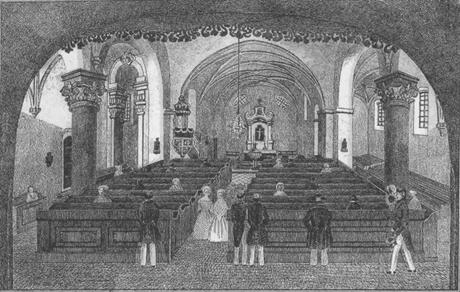
Prayer room “Bethaus” interior from below the gallery
(year 1841)[91]
State
bankruptcy of 1811
Ferdinand
Delorme lost the greatest part of his fortune, thanks to so called financial
patent of 1811. A large part of his fortune
was stored in the so-called Bankocetls (see image) These unfortunate
vouchers issued from 1761 to 1806 by Vienna's Bank are described in Otto's
dictionary: "Bankocetle (Banko-Zettel)
bankocedule, infamous paper money issued by the state
or a bank, state, or bank notes; especially in our country paper money issued
by the Municipal Bank of Vienna and later by the state under the name of the
bank. When because of overprinting bankocetls and the
state bankruptcy (devaluation) their price decreased, people started to call
them black bills." On 15th
March 1811 the national bankruptcy was declared and the nominal value of bankocetls, according to the financial decree of 20th
of February devalued to 1/5 of their value. By doing this the state was
stripped by four fifths of its debt by moving 80% of it to the people.
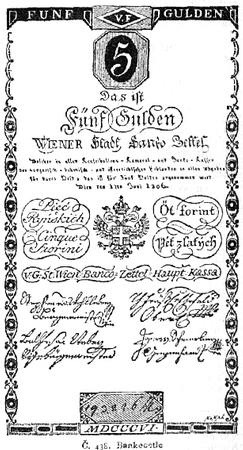
Figure 154 Bankocetle of Viennese banks
You
can guess that "high standard of living" or "favorable
financial circumstances," which were so far enjoyed by the family,
subsequently underwent changes. But we
know that Ferdinand did not sell Villa Delormka in Smíchov for the rest of his life - and he also remained
active in church and charity. “It was
bequests and gifts of the former Smíchov’s vicar P. Reichel and donations of the Prague merchant Delorm that the pauper Institute by K. K. Weinbergamts-Gründe was established from. It distributed alms between 17 poor people.”
[92]
Anna
„Nanny“ Brzorad née Delorme (1795-1846)
The
daughter’s wedding certainly could not do without a dowry. On the 11th June 1811 at the
parish church in Smíchov the 16-year-old Anna
Katharina Elisabeth Theresia "Nanny" Delorme, a Catholic, born on the
09th June 1795, married a 30-year-old Joseph Brzorád
(1777-1857), owner of the estate Lochkov. The witness was the groom's brother, Mr.
Johann Brzorád, a municipal lawyer and Mr. Kaspar Weisenberger, “Kauf und Handelsmann”, husband of
the sister of the bride Theresa née Delorme. Anna will give birth to 7
children, will perfectly bring them up and with her husband they will provide
for them excellently. Their fortunes can be tracked back in the following part
- Familie Brzorád.
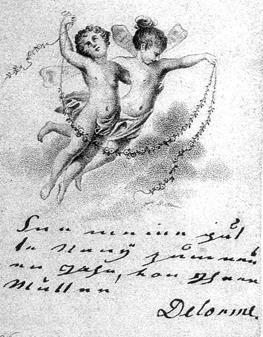
Image 155 Kärtchen von Maria Anna
Delorme fuer Nanny:
„Für meine gutte Nanny zum neuen Jahr von ihrer Mutter
Delorme.“ [93]
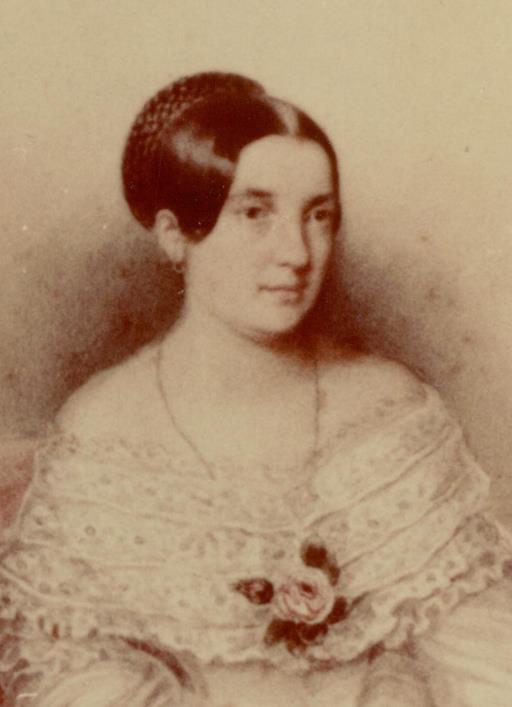
Image 156 Anna „Nanny“ Brzorád née Delorme (1795-1846)[94]
In
the Archives of the National Museum, in the fund of Černý,
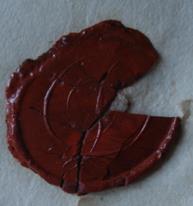
voluminous correspondence of the newlyweds remained preserved. The seal that adorns the top of this section Familie Delorme, was broken
regularly by Josef Brzorád. The letter dated 8th
June1811, signed by Anna "Nanny" can be found here. (See the image
below)
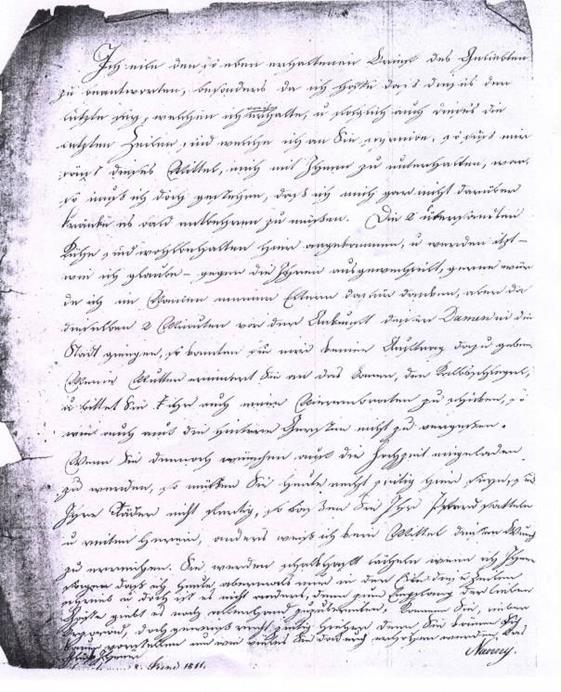
Image 157 Letter of 8th June 1811 signed by Anna „Nanny“ Delorme
With
this beautiful handwriting she wrote letters in Czech and German. The further fate of Anna Maria
"Nanny" Delorme married Brzorad can be read
in the text about Josef Brzorád in the section Familie Brzorad. Also there is
information about her life in Lochkov, meetings with
the Danish Queen, the painter Laesoto and more. There you will also find a letter of the same
date. Its salutation reads "Liebste Nina",
but instead of the letter D in the seal it is JB. Josef’s handwriting is small and hard to read
and unlike Nanny, Josef does not use the Czech language.
In 2012 the whole correspondence was
carefully studied by Else Fritschl, who revealed many
interesting details about the very start of the relationship of the Delorme’s and Josef Brzorád. We carry them in the section Familie Brzorád, in the chapter
on Josef Brzorad (1777-1857).
The
death of Marie Anna (1759-1815) and Ferdinand Delorme (1755-1827)
In 1815 Ferdinand’s wife Maria Anna died. The death notice, which their grandson Vilém Brzorád (1814-1898) saved
in his collection as a sample of Ferdinand’s style, reads as follows:
"This afternoon at four thirty my wife Anna Marie
Schell, after a long untold suffering, very easily and in an unexpected moment
terminated her earthly pilgrimage, as a result of general dropsy (edema around the heart). For 32 years of her 56 years of
life, she lived as the most faithful
companion of my demanding life, and the most tender
mother. Her remains will be buried on
Monday 9th of this month in the afternoon at three o'clock in Malá Strana’s God's holy
field. The next day at ten o'clock in
the morning the Requiem Mass will be read for her in the local parish church of
St. Philip and Jacob, to which you are hereby invited. Smíchov January 7,
1815. Ferdinand Delorme". (For the original text see the image of the
death notice below.) [95]
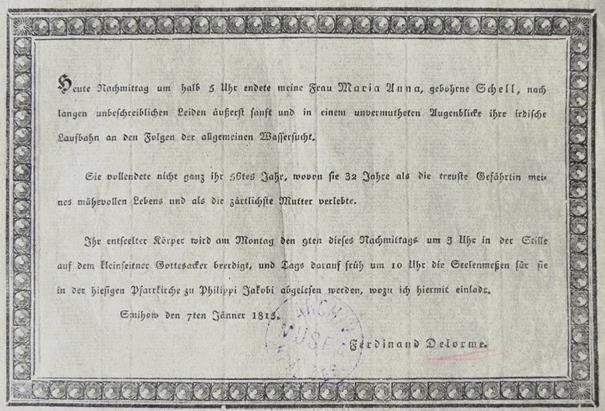
The death notice of
Marie Anna Delorme from Dr. Pouzar’s
collection of death notices. Sent by Ing.
Gabriela Kalinová.[96]
Anna’s
grave ledger is located in the center of the northern
wall of the Malá Strana
Cemetery. (For the image of the grave ledger - see below. The original grave of
the couple might have been located in the eastern section, which was later
destroyed during the Plzeňská street construction.)
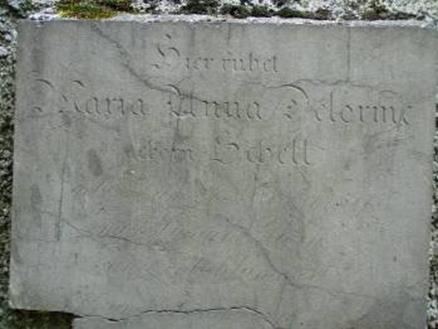
Image 158 The grave ledger in the Malostranský cemetery „Hier ruhet Maria Anna Delorme geborn Schell“
Ferdinand
Delorme died May 30, 1827. To his memory
his daughter Anna dedicated the following words:”Ferdinand
Delorme, Prague citizen and businessman born in Braunschweig
on 20th 08 1755, although not the Bohemian, he actively loved his
second homeland and tirelessly tried to spread around happiness and
contentment. With Christian patience he
also received bitter fates from the hands of Providence and willingly followed
her voice and on 30th May 1827 at 4 o’clock in the morning died. Loving husband and especially perfectly good
and careful father is resting alongside his virtuous and faithful wife and his
memory remains dear and unforgettable to his close ones." [97]